[Campus Live Report] The Banana Stem Turns into Feed! — What Kind of Agricultural Techniques Are ARI Participants Learning in Japan?
2026/9/17 11:33
![[Campus Live Report] The Banana Stem Turns into Feed! — What Kind of Agricultural Techniques Are ARI Participants Learning in Japan? Main Visual](/_next/image?url=https%3A%2F%2Fstorage.googleapis.com%2Fsyncable-app%2Fcampaign%2Freports%2Fac5816ca30fc49a1b70b8002d985152e.png&w=3840&q=75)
Thank you very much for your continued support of our activities.
In September, we are bringing you real-time updates on the 9-month training program at ARI, including the Westen Japan Study Tour, which is made possible through your support.
What kind of agricultural techniques are ARI participants learning in Japan?
When people think of Japanese agriculture, they often picture advanced technology and machinery. You might assume that ARI participants come to study in a "developed" country like Japan to learn the latest high-tech methods and apply them to their home countries' development. However, the agriculture taught at ARI is quite different.
Participants rarely touch farm machinery, including tillers. No matter how advanced a technique is, learning it in Japan is meaningless if it cannot be applied back home. What we teach here is organic farming, which is gentle on both people and the environment, and accessible to impoverished rural communities because it avoids the high costs of chemical fertilizers and pesticides.
Even when it comes to making fertilizer, participants from Southeast Asia, Africa, and the Pacific region cannot easily source the exact same materials in their respective home countries. That is why we emphasize two core principles: "What you need is around you" and "Utilizing Local Resources." At ARI, we use abundant rice husks and chicken manure, but depending on the region, corn cobs or even elephant manure(!) might be far more practical.
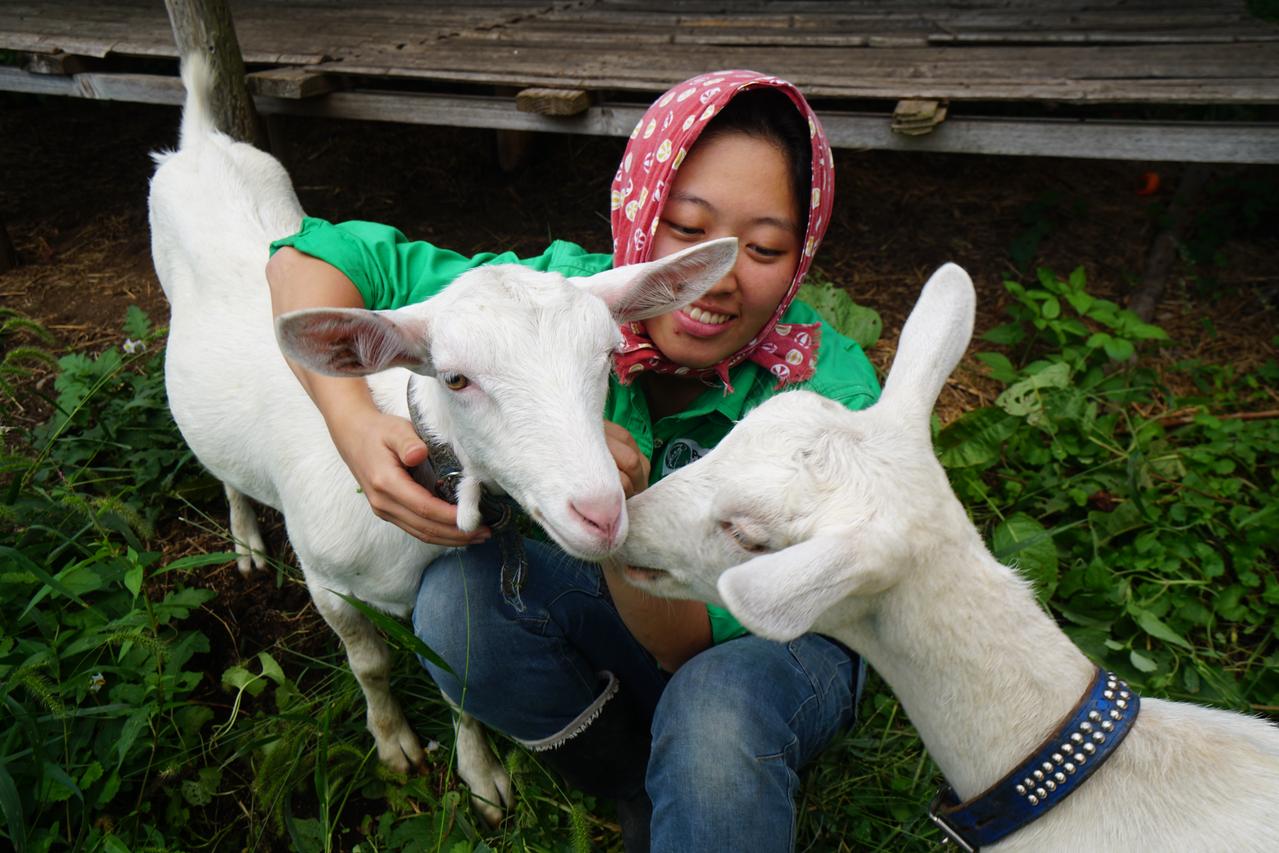
Another concept we would like to share is "Foodlife." This is a unique ARI concept based on the idea that "Food" and "Life" are inextricably linked. Producing over 60 types of crops and raising various livestock to achieve a self-sufficiency rate of over 90%, the ARI community—participants, volunteers, visitors, and staff—comes together every morning and evening for "Foodlife Work." Through sharing tasks in the fields, livestock care, and meal preparation, we nurture food and sustain each person's life. Through learning and practicing "Foodlife" in harmony with nature, participants deepen their understanding of sustainable agriculture and learn how to foster community self-reliance.
Having been cultivated without chemical pesticides or fertilizers for about 50 years, the soil at ARI is dark, soft, and richly sustains our large community every year. Promoting organic farming is never an easy path in any country or region, which is why ARI's long-standing practical success serves as a great source of encouragement for many participants.
Next, let's take a look at the classes through a report from Curriculum staff!
Seasonal Individual Projects — Three Days of Tackling Personal Challenges
In August, participants spent 3 days on their Seasonal Individual Projects. A highlight was how much they learned from each other and used their own knowledge as effective resources. Some are still continuing their project (for example: the mushroom project - which seems to be going well) and we are eagerly anticipating their outcomes! I often find participants sharing information about their learning with one another before and after supper, which is great!
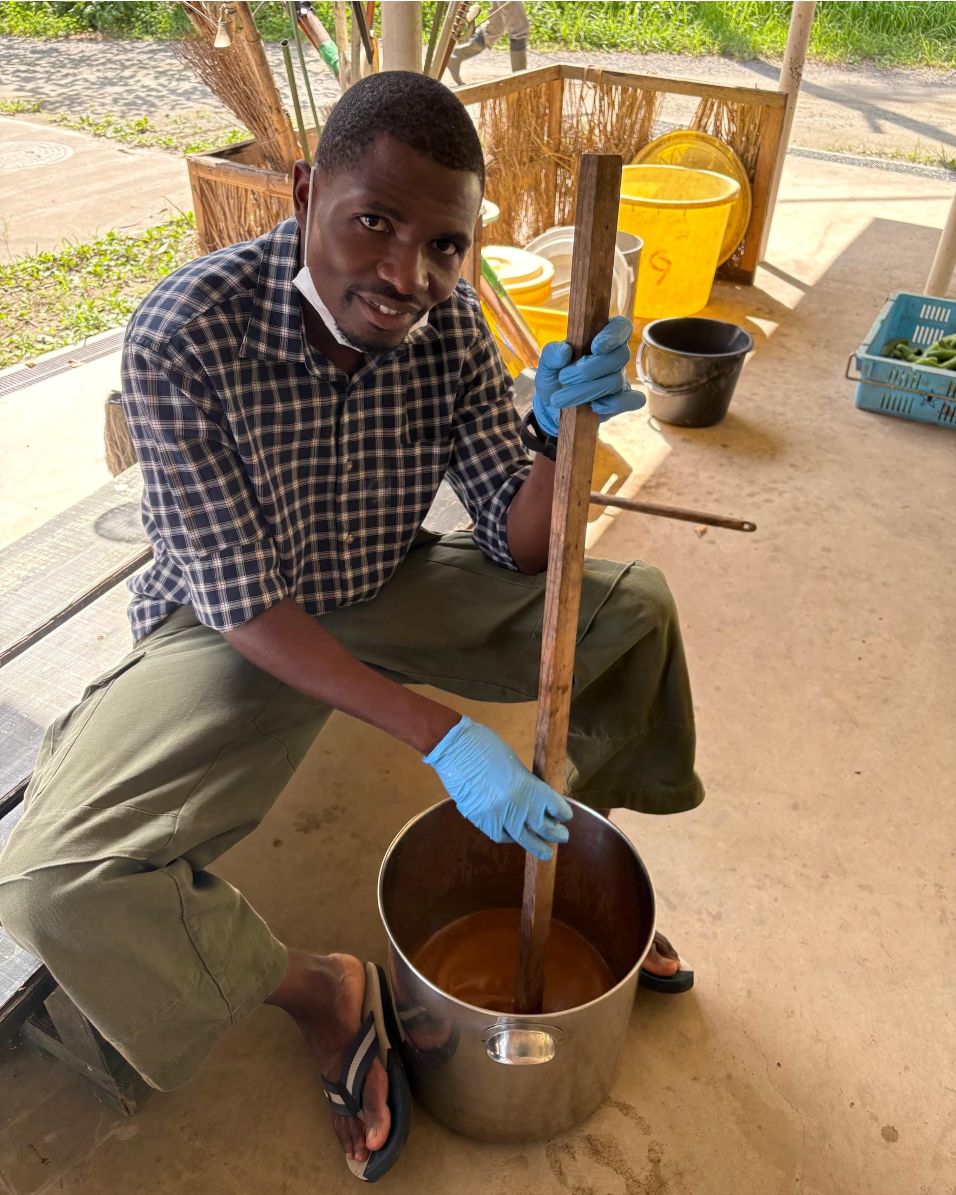
JJ, a participant from Malawi, making soap.
The Banana Stem Turns into Feed! — A Hands-on Class with Shaun from ECHO Asia
"What are low cost but effective ways to raise livestock?”
“Why is livestock nutrition important?”
“How do you select, clean, and store seeds for your farm?”
These questions and more were answered through theory and practice by our guest, Shaun Snoxell from ECHO Asia Impact Center. Participants especially enjoyed learning about practical feeds and ways to calculate nutrition. In addition, they could make fermented banana stem feed with local resources and are now looking forward to using it.
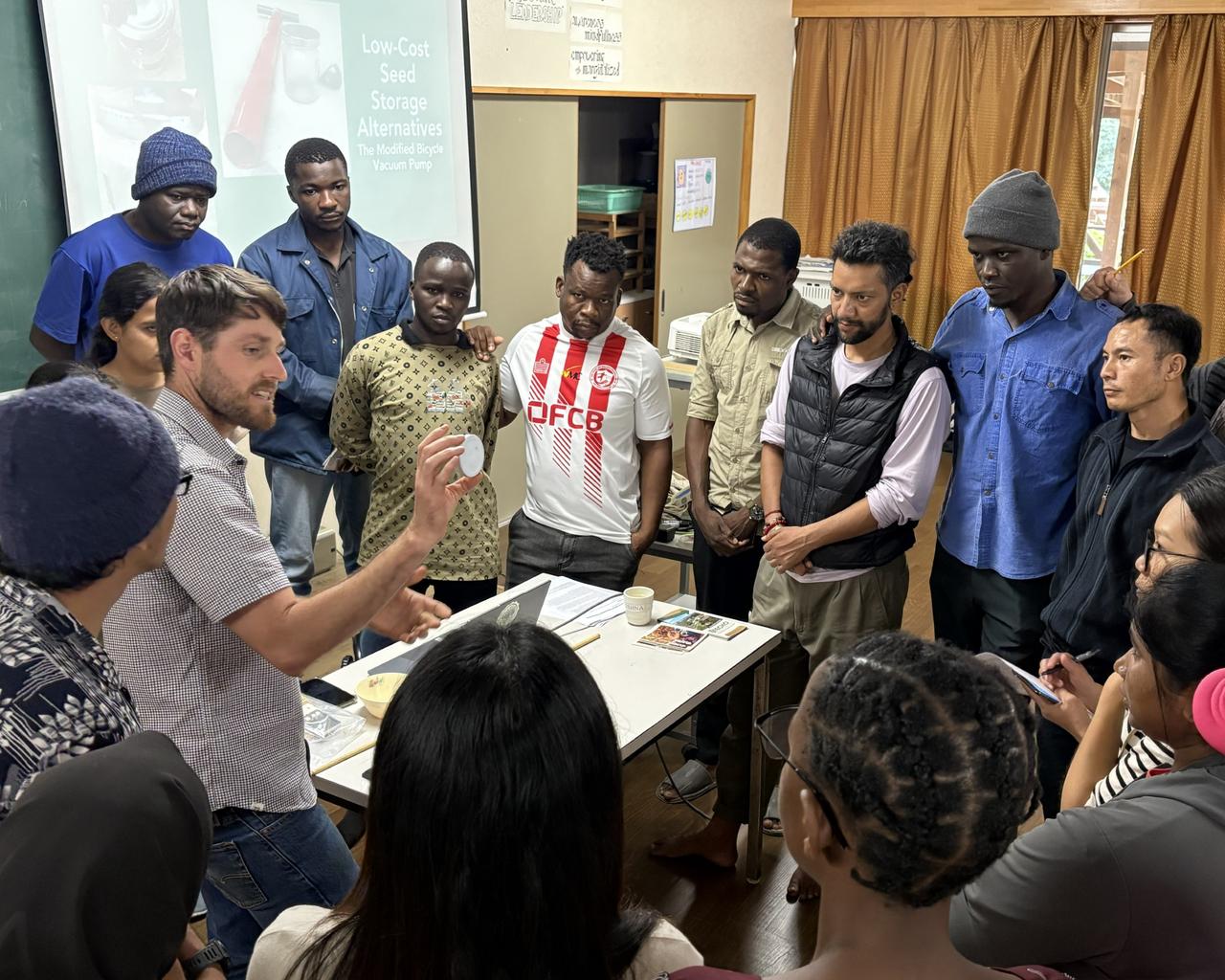
Participants listening intently to the lecturer.
🚌Thank you so much for supporting our Campaign!
We are taking on our final goal until the end of September🙌
Give 22 Rural Community Leaders from Around the World a Chance to Learn from "Pain and Rebirth"!
世界の農村コミュニティリーダー22名に「痛みと再生」を学ぶチャンスを!あなたの寄付が隣人とやさしく生きる世界を作ります。
📱Check out our stories and reels!
We're highlighting words from our supporters and showcasing what our participants are learning on campus.
"Fuel for 1 Student to Travel 1 Day to the Field"
¥1,000
Fuel support to move the minibus 25 km forward (or parking fees/miscellaneous costs for safe parking and rest stops).
Fuel cost (¥40/km) × 25 km. An accessible tier that directly supports a student’s daily travel, as well as safe parking and rest during the journey.
"Safe Infrastructure Support for the 3,000 km Journey"
¥3,000
Highway toll and parking fee support for safe long-distance travel (or fuel costs for 75 km).
Covers 75 km worth of fuel or practical expenses needed to secure a safe driving environment (highways and parking facilities) throughout the trip.
"Highway Tolls for 1 Participant across the Entire 3,000 km Journey"
¥5,000
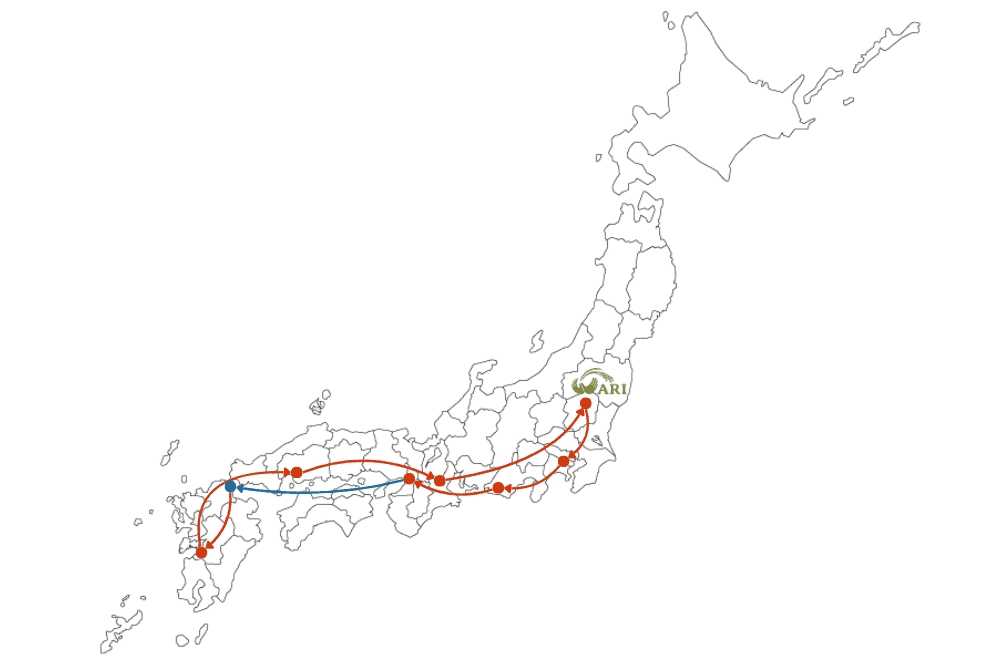
Highway toll fees for 1 participant to travel safely and on schedule to training sites across Western Japan.
By easing the physical strain of long-distance travel, this creates an environment where participants can focus 100% on their hands-on experiences and dialogue at each destination.
"Overnight Ferry & Warm Breakfast Support for 1 Participant"
¥10,000
Ferry fare (bed accommodation) between Osaka and Moji plus breakfast for 1 participant.
Crucial support to help participants stay healthy and well-rested during long travel, ensuring they reach their next training site in peak condition.
"Microbus Rental Fee for 1 Day (A Mobile Learning Hub)"
¥30,000
Equivalent to approximately 1 day of vehicle rental out of the total ¥400,000 minibus rental cost.
Secures 1 day of a "classroom on wheels" where active discussion and reflection take place on the road, supporting meaningful growth and mutual inspiration among participants.
"Full Travel Expenses for 1 Participant to Complete the Western Japan Study Tour (3,000 km)"
¥50,000
All transportation costs for 1 student to complete the 3,000 km Western Japan Study Tour (bus rental portion, fuel, highway tolls, ferry, and parking fees).
Comprehensive support that backs the entire journey of a participant confronting real-world issues in the field and growing into a leader who transforms themselves to transform the world.
"1/4 of the Microbus Rental Cost Connecting Learning Sites Across Western Japan"
¥100,000
Covers 25% of the ¥400,000 total minibus rental cost.
This major support underpins the foundational infrastructure of the project, strongly sustaining the mobility essential for all participants to travel, learn, and connect across Western Japan.