A Walk in the Village: Angel’s Work in Indonesia
2026/9/23 15:28
During September, we are highlighting the global impact of ARI training through the work of our graduates.
This week, we share an activity report on Angel, a 2023 graduate from Indonesia, written by Steven Cutting of the ARI Graduate Outreach.
A Walk in the Village
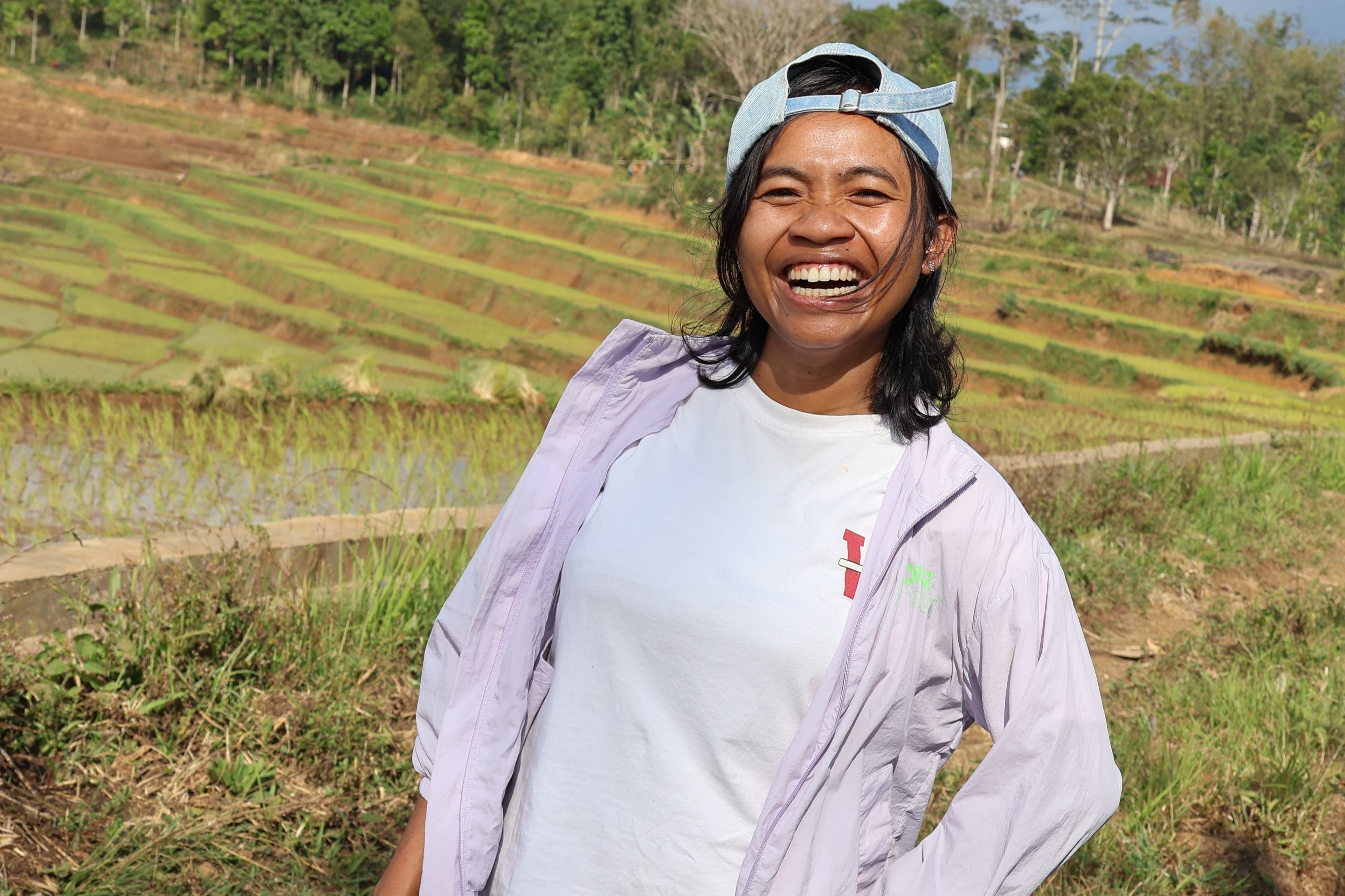
Last August I had a chance to spend several days with Angel, an ARI graduate of 2023, in her ethnic Manggarai community on Flores Island, Indonesia. Though her size is small, her energy and passion are seemingly limitless. There are so many things I want to tell you about her, I don’t know where to begin.
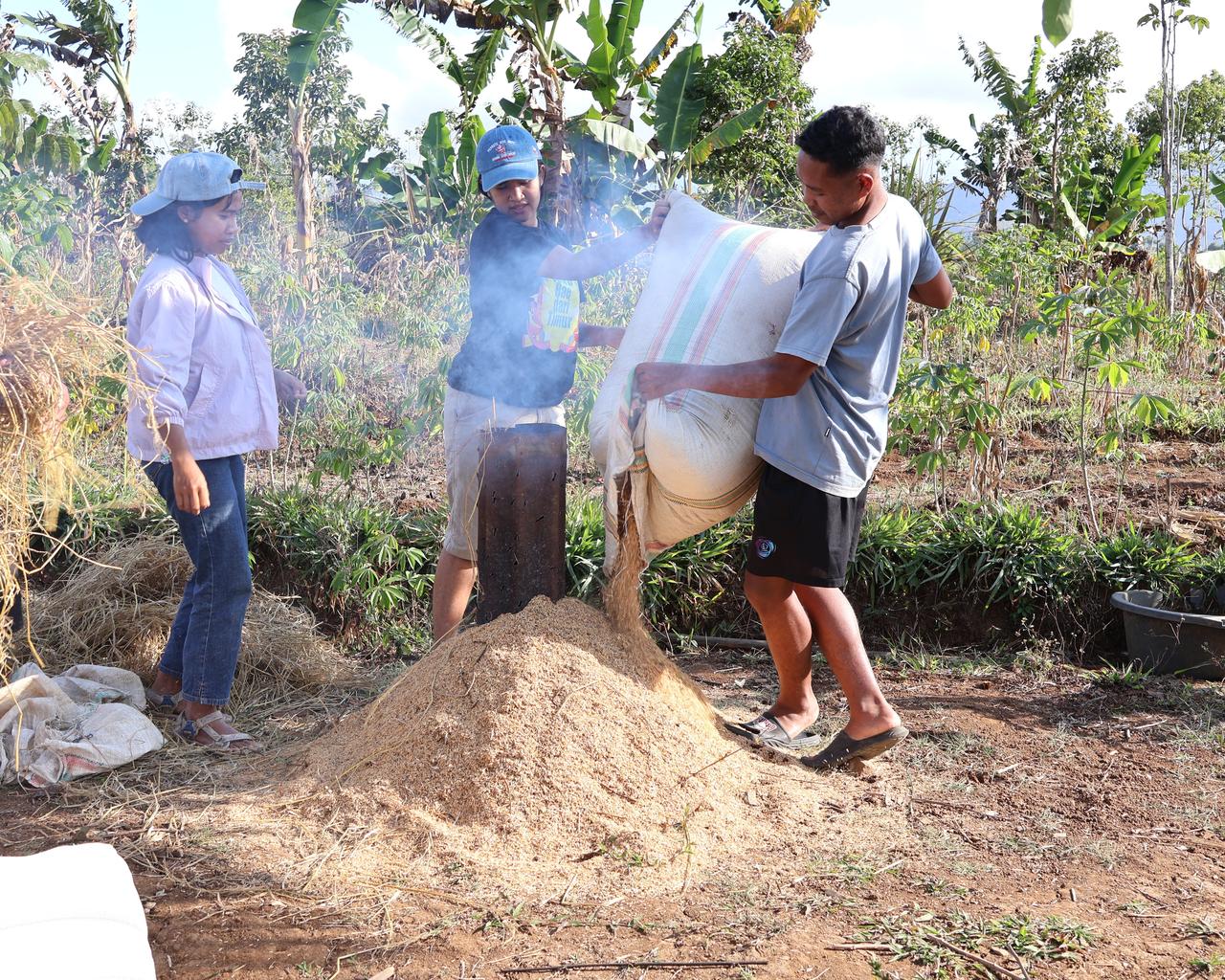
I suppose I could start with the afternoon we made rice husk charcoal with her close friends. While waiting for the husks to carbonize we ate homemade snacks and chatted about ARI. She hopes they can all go one day, because she knows how much ARI will impact them as it did her. “At ARI, I found my soul,” she says. These are the core members of Monang Lino a farmer youth organization she started. The name means Love Earth and though they didn’t have any previous experience in agriculture, they have all become skilled farmers and teach youth in the surrounding villages about farming using local resources. This charcoal will be used for a bokashi making lesson next week. Their dream is to build a network of young organic farmers throughout the Manggarai Regency.
Then there is also Hekang Dite, a group she started in her home village long before she went to ARI. The name means Our Home and it involves 15 young people who manage gardens, write stories about food, and campaign for sustainable agriculture. They have made a demonstration farm on land next to the church where they raise not only crops, but also goats, pigs, and chickens to make it a truly integrated farm.
Also, I can’t forget to mention all those videos she makes right on her phone (Gen Z talent), that the government uses to promote and preserve traditional Manggarai culture. Or the hands-on session she and her team did with students at a local high school to teach about climate action and the importance of eating local. Or how we trekked through an ancient moss-covered forest of towering trees and gushing waterfalls; a place where Angel goes for shin rin yoku. (She loves these Japanese words.) She works so hard for the land and the people, but it is also in the land and people where she finds rejuvenation.
But the thing I want to tell you about most, is our visit to Kajong, the village Angel was born and grew up in. Here I saw the essence of what makes Angel Angel. It is the fertile soil where her roots are planted, and fill her with vitality to bloom where ever she goes.
When we arrived late in the evening, we were warmly welcomed by her mother, brother, and young niece, and immediately made to sit at the table for a homecooked meal. The next morning, neighbors were calling out from their house across the street, “Is Angel here? Is Angel back?” Her mother replied from the kitchen garden where she was picking vegetables for breakfast. “Yes, Angel is back.” Then she told Angel to feed the pigs, who happened to live behind that neighbor’s house. Angel collected the feed bucket and as she crossed the road, more neighbors shouted greetings, and a small girl ran into her arms for a big hug.
After breakfast we went for a stroll through the village and the greetings continued – with many handshakes, hugs, and “when did you get back?” Many are her aunts, uncles, and cousins.
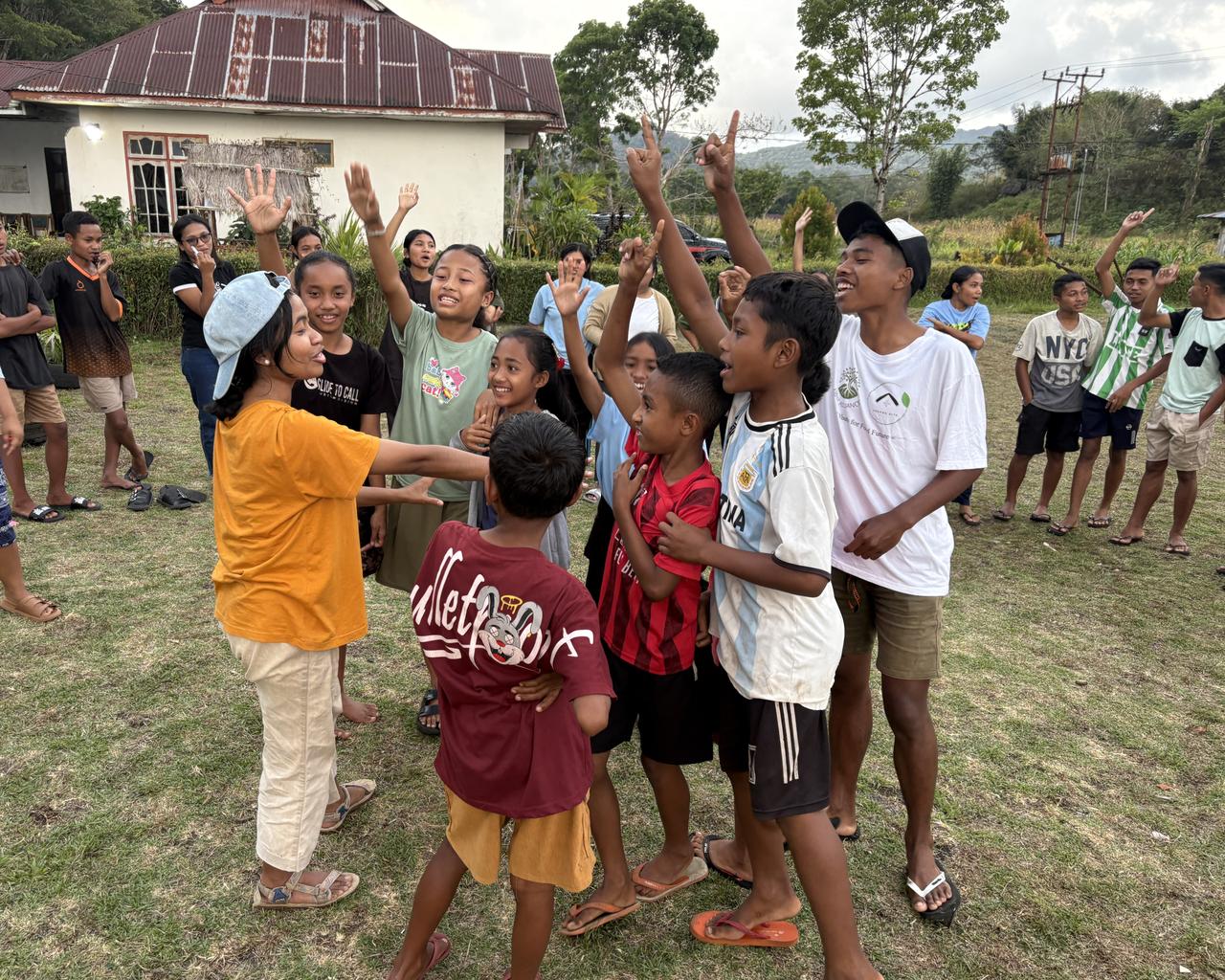
Not far down the street, was Angel’s old elementary school and when the kids saw us, they came running, shouting English words they had learned, “What is your name? Where are you from? What is your hobby?” We made quite a disturbance. Next, we came upon the village church, and did a quick inspection of the Hekang Dite garden. Hmm. Some of the tools are not put away, Angel noticed. We continued on through native forests and fields planted with corn and soy beans, and passed her old junior high school. Next to it is a high school, built just a few years ago. Angel wrote a grant to the government, which was accepted and Kajong got a high school. When she was a teenager, Angel had to go to high school in another town.
A little further down the road we came to the house of another auntie, and the whole big family came to greet her – laughing and chattering heartily. I stepped back for a moment to take in the scene. It was one of pure joy, love, and appreciation of family and close friends. The theme for this campaign is “Living kindly with neighbors.” I think that in Kajong I have found its perfect image.
Angel Biu, 2023 Graduate
Text and photos by Steven Cutting, ARI Graduate Outreach Coordinator
🚌Thank you so much for supporting our Campaign!
We are taking on our final goal until the end of September🙌
Give 22 Rural Community Leaders from Around the World a Chance to Learn from "Pain and Rebirth"!
世界の農村コミュニティリーダー22名に「痛みと再生」を学ぶチャンスを!あなたの寄付が隣人とやさしく生きる世界を作ります。
📱Check out our stories and reels!
We're highlighting words from our supporters and showcasing what our participants are learning on campus.
🌎 Learn about our Graduates' achievements – Click here for the official ARI Blog, "Rural Leaders":
A Walk in the Village | ARI Rural Leaders Blog
"Fuel for 1 Student to Travel 1 Day to the Field"
1,000円
Fuel support to move the minibus 25 km forward (or parking fees/miscellaneous costs for safe parking and rest stops).
Fuel cost (¥40/km) × 25 km. An accessible tier that directly supports a student’s daily travel, as well as safe parking and rest during the journey.
"Safe Infrastructure Support for the 3,000 km Journey"
3,000円
Highway toll and parking fee support for safe long-distance travel (or fuel costs for 75 km).
Covers 75 km worth of fuel or practical expenses needed to secure a safe driving environment (highways and parking facilities) throughout the trip.
"Highway Tolls for 1 Participant across the Entire 3,000 km Journey"
5,000円
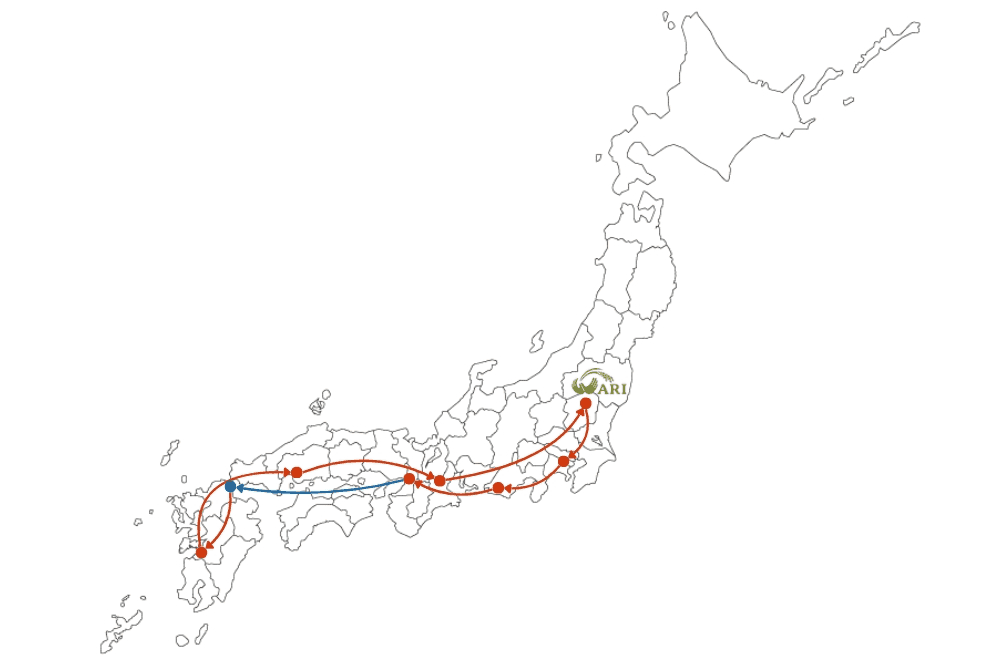
Highway toll fees for 1 participant to travel safely and on schedule to training sites across Western Japan.
By easing the physical strain of long-distance travel, this creates an environment where participants can focus 100% on their hands-on experiences and dialogue at each destination.
"Overnight Ferry & Warm Breakfast Support for 1 Participant"
10,000円
Ferry fare (bed accommodation) between Osaka and Moji plus breakfast for 1 participant.
Crucial support to help participants stay healthy and well-rested during long travel, ensuring they reach their next training site in peak condition.
"Microbus Rental Fee for 1 Day (A Mobile Learning Hub)"
30,000円
Equivalent to approximately 1 day of vehicle rental out of the total ¥400,000 minibus rental cost.
Secures 1 day of a "classroom on wheels" where active discussion and reflection take place on the road, supporting meaningful growth and mutual inspiration among participants.
"Full Travel Expenses for 1 Participant to Complete the Western Japan Study Tour (3,000 km)"
50,000円
All transportation costs for 1 student to complete the 3,000 km Western Japan Study Tour (bus rental portion, fuel, highway tolls, ferry, and parking fees).
Comprehensive support that backs the entire journey of a participant confronting real-world issues in the field and growing into a leader who transforms themselves to transform the world.
"1/4 of the Microbus Rental Cost Connecting Learning Sites Across Western Japan"
100,000円
Covers 25% of the ¥400,000 total minibus rental cost.
This major support underpins the foundational infrastructure of the project, strongly sustaining the mobility essential for all participants to travel, learn, and connect across Western Japan.