From Tomoko Arakawa, Managing Director of Asian Rural Institute - Why We Continue the Western Japan Study Tour?
2026/8/29 12:40
Dear Everyone,
Thank you as always for your continued interest in the Asian Rural Institute (ARI).
I am Tomoko Arakawa, Managing Director.
While we have sent several updates regarding our fundraising campaign, "Living Kindly with Neighbors," I am reaching out today not simply to ask for donations, but because I want to share with you what the Western Japan Study Tour is truly all about in the first place.
Why has this study tour, a tradition since the founding of our institute, remained an indispensable learning experience for ARI?
This message is a bit long, but I would be deeply grateful if you could take a moment to read it when you have time.
What is the Asian Rural Institute's Western Japan Study Tour?
The Western Japan Study Tour is a long-standing program that dates back to the early days of ARI, serving as an indispensable learning opportunity for the rural leaders from an educational perspective.
This trip could never exist without the supporters in various regions who sustain it. Behind every unforgettable journey of learning for our participants and accompanying staff lies the generous help of our supporters and the warm hospitality of host families. Here is a brief introduction to the three main regions we have visited since the program's inception.
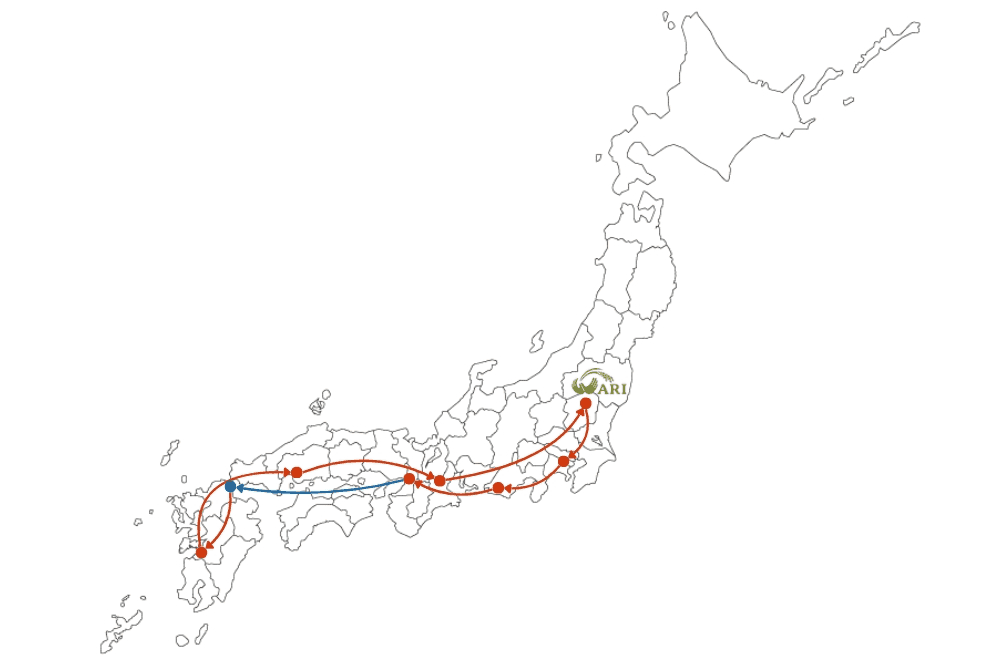
Our first stay is in Hamamatsu City, Shizuoka Prefecture, where we visit the Seirei Group. This relationship began when ARI founder Rev. Toshihiro Takami asked Mr. Tamotsu Hasegawa, the founder of Seirei, for support in establishing ARI. Mr. Hasegawa promised Rev. Takami, "Once ARI is established, I will spare no effort in supporting your study tours." Since then, numerous people affiliated with Seirei—including those from the hospital, nursing college, preschool, junior and senior high schools, welfare facilities, and Enshu Eiko Church—have welcomed our participants as host families.
(Although homestays are no longer held today, some former host family members later became ARI staff, and one even became my relative!)
Mr. Shinobu Yamanaka's mandarin orange orchard, which we always visit in this region famous for citrus, holds wonderful memories for our participants. Year after year, they warmly welcome us and generously allow participants to pick as many oranges as they like directly from their trees.
For our field study and homestays in Osaka, Osaka YMCA has supported us since the very beginning of this tour. In 1977, Mr. Yoshinobu Tanaka, then a staff member at Osaka YMCA, was seconded to the National Council of YMCAs of Japan, where he oversaw a three-month training course for professional secretaries from across the country. During that assignment, he launched a training program at ARI for YMCA staff, deepening the connection between the two organizations. Even after returning to Osaka, Mr. Tanaka carefully nurtured the bond between Osaka YMCA and ARI.
While the homestay program through Osaka YMCA was temporarily suspended due to the COVID-19 pandemic, it resumed in 2024. Remarkably, one of past host families has even gone on to join ARI as a Japanese participant.
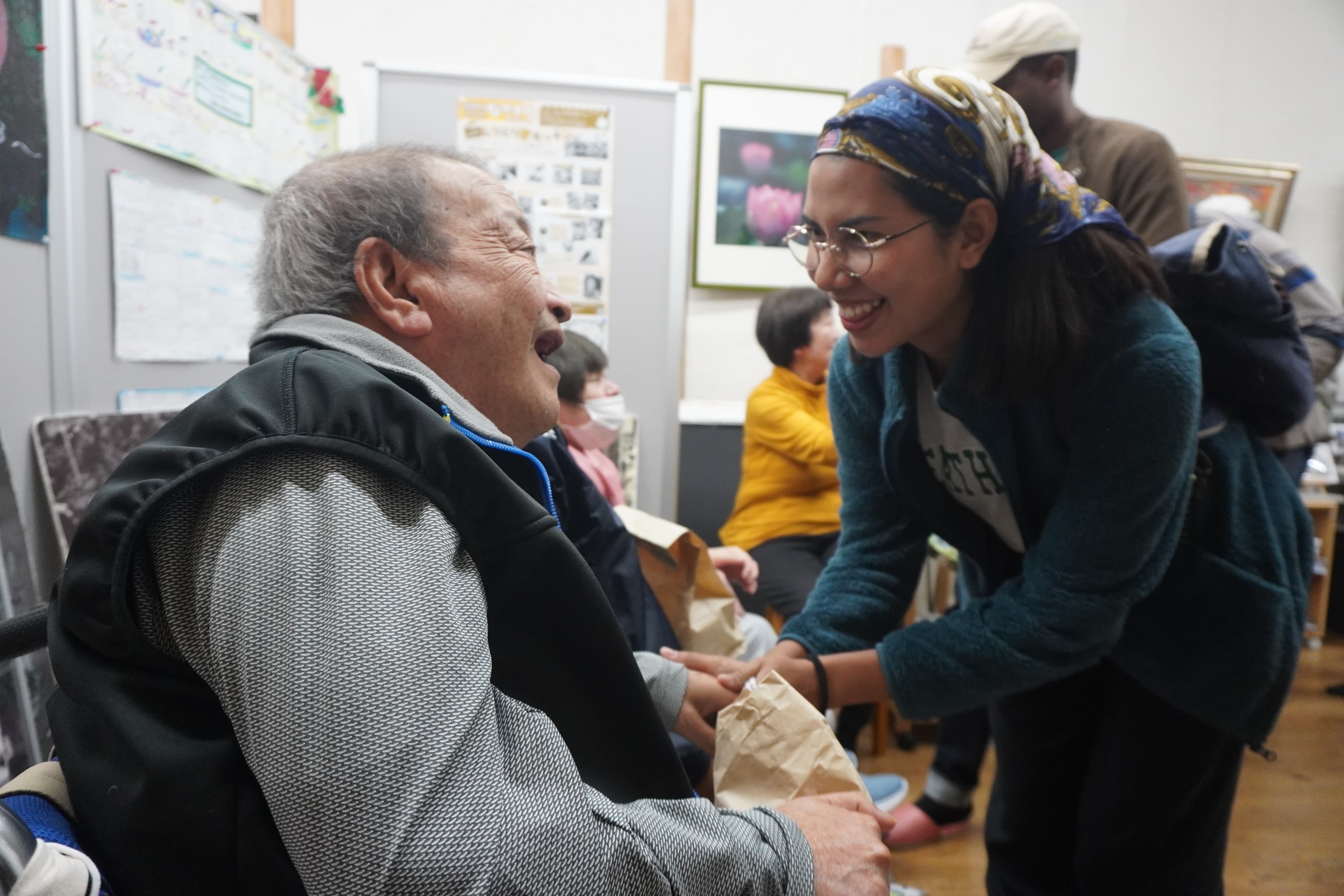
Our third destination is Minamata, Kumamoto Prefecture. The origins of our current local counterpart, Karatachi, lie in the Minamata Fukuro District Anti-Pesticide Farmers Association (Hannoren). Mr. Tadao Osawa, Ms. Tsutako Osawa, and members of the association have continuously supported us since the 1980s. Today, their daughter Ms. Nahoko Osawa serves as the main host coordinator, continuing this support into the second generation. Minamata was also a region that continued to accept our trip during the pandemic, even when the number of participating students dropped to just four.
In addition, the Hiroshima Peace Memorial Museum is an indispensable stop. After visiting Hiroshima during this trip, Thomas Mathew, our graduate from South India, was inspired to launch anti-nuclear and peace movements back in India. Our destinations have evolved over time; past itineraries have included visiting the farm of Masanobu Fukuoka, a pioneer of natural farming in Shikoku, as well as agricultural sites, civic initiatives, and social welfare organizations across Western Japan, including Kyushu and Chugoku. Currently, we visit Aino Gakuen Agricultural High School in Mie Prefecture every year, and their students also visit ARI, maintaining a vibrant two-way exchange.
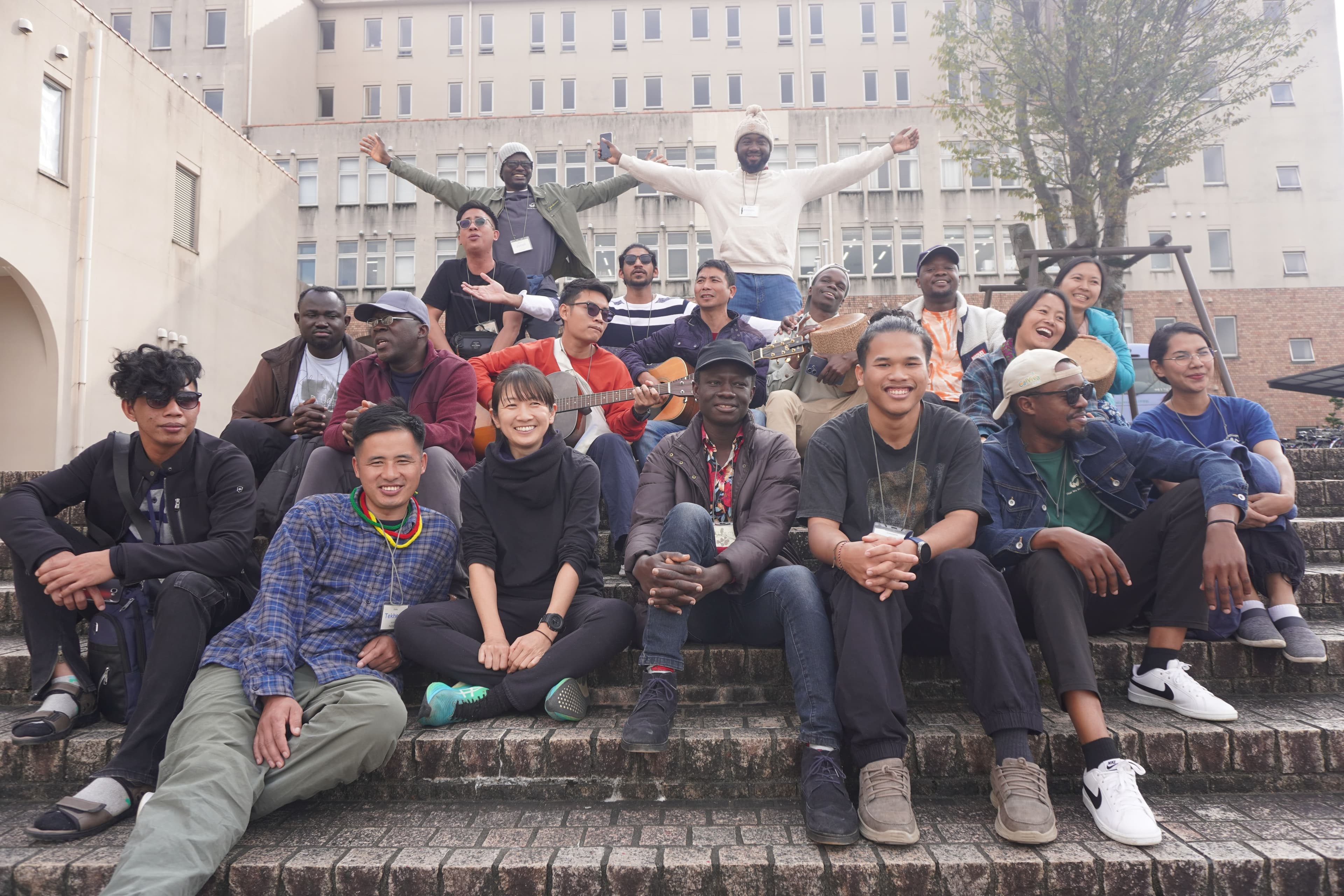
During the Western Japan Study Tour, four to five accompanying staff members take turns driving a microbus and translating. Formerly lasting over two weeks, it currently spans 12 days, covering approximately 3,000 kilometers. Passing right by tourist spots, it is a journey focused on meeting and engaging in dialogue with people who persevere through hardship, as well as those who walk alongside them.
I have long felt that this trip is precisely the kind of journey that Japanese people themselves should experience. It is a journey to encounter another side of Japan, a history that must not be forgotten, and people who should be remembered for a lifetime.
Thank you so much for reading to the end.
Thanks to the generous support of so many people, we have reached our goal of 2.2 million yen required for the West Japan Study Tour, ensuring that it will take place again this year.
To support the remainder of our participants' journey, the campaign will continue through the end of September.
We will continue to share updates on the study tour and our participants' progress with you. We truly appreciate your warm and continued support.
Asian Rural Institute Tomoko Arakawa, Managing Director
"Fuel for 1 Student to Travel 1 Day to the Field"
1,000円
Fuel support to move the minibus 25 km forward (or parking fees/miscellaneous costs for safe parking and rest stops).
Fuel cost (¥40/km) × 25 km. An accessible tier that directly supports a student’s daily travel, as well as safe parking and rest during the journey.
"Safe Infrastructure Support for the 3,000 km Journey"
3,000円
Highway toll and parking fee support for safe long-distance travel (or fuel costs for 75 km).
Covers 75 km worth of fuel or practical expenses needed to secure a safe driving environment (highways and parking facilities) throughout the trip.
"Highway Tolls for 1 Participant across the Entire 3,000 km Journey"
5,000円
Highway toll fees for 1 participant to travel safely and on schedule to training sites across Western Japan.
By easing the physical strain of long-distance travel, this creates an environment where participants can focus 100% on their hands-on experiences and dialogue at each destination.
"Overnight Ferry & Warm Breakfast Support for 1 Participant"
10,000円
Ferry fare (bed accommodation) between Osaka and Moji plus breakfast for 1 participant.
Crucial support to help participants stay healthy and well-rested during long travel, ensuring they reach their next training site in peak condition.
"Microbus Rental Fee for 1 Day (A Mobile Learning Hub)"
30,000円
Equivalent to approximately 1 day of vehicle rental out of the total ¥400,000 minibus rental cost.
Secures 1 day of a "classroom on wheels" where active discussion and reflection take place on the road, supporting meaningful growth and mutual inspiration among participants.
"Full Travel Expenses for 1 Participant to Complete the Western Japan Study Tour (3,000 km)"
50,000円
All transportation costs for 1 student to complete the 3,000 km Western Japan Study Tour (bus rental portion, fuel, highway tolls, ferry, and parking fees).
Comprehensive support that backs the entire journey of a participant confronting real-world issues in the field and growing into a leader who transforms themselves to transform the world.
"1/4 of the Microbus Rental Cost Connecting Learning Sites Across Western Japan"
100,000円
Covers 25% of the ¥400,000 total minibus rental cost.
This major support underpins the foundational infrastructure of the project, strongly sustaining the mobility essential for all participants to travel, learn, and connect across Western Japan.